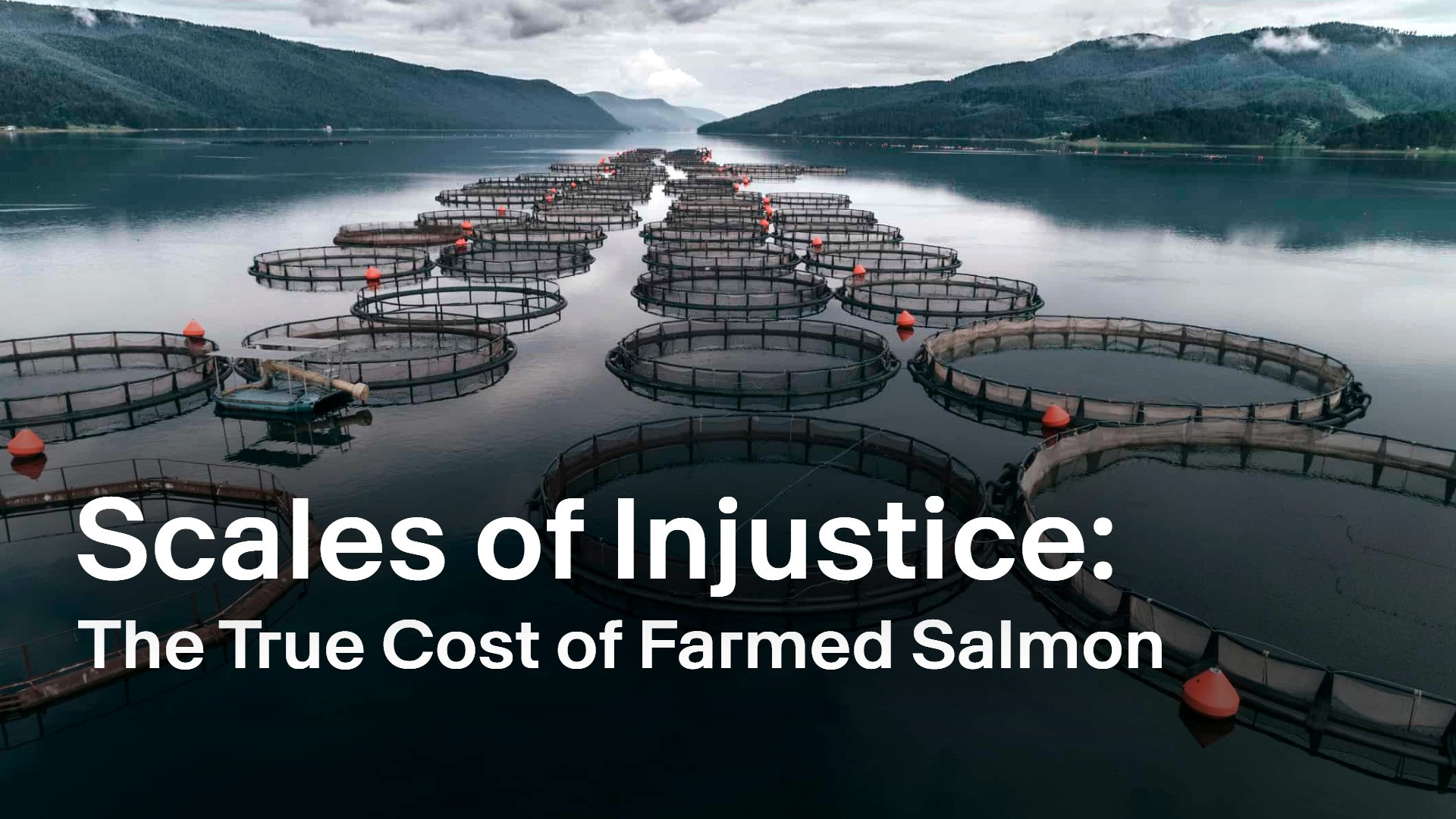
Scales Of Injustice: The True Cost Of Farmed Salmon
How does the farmed salmon industry hook consumers with a fishy tale about its practices? Don Stanford, a Scottish activist, has been swimming against the tide for 25 years, exposing the rotten state of salmon farming. Despite mortality rates scaling new heights at 85% in some Scottish farms, the industry keeps making profits. In Norway, Ruben Oddekalv casts light on how sea cages are muddying fjords waters. Not only are farms polluting fjords, but over two decades, 90% of inspections found faults with Norwegian hatcheries, including the industry leader Mowi. Despite reeling off promises, industry players continue to cause ecological damage and animal cruelty. Many consumers are still at sea about the dirty tricks of a sector that's raking it in year after year.
Filming Locations
Norway (fjords, fish farms, hatcheries)
Scotland
Chile (mentioned)
Switzerland
England (south)
Main Contributors
Don Stanford - Scottish activist, campaigning against intensive salmon farming for 25 years
Ruben Oddekalv - Head of the Norwegian Environmental Protection Association, investigating farms for 20 years
Trigger Popper - Veterinarian specializing in fish health, now retired
Finlay Carson - Scottish Conservative MP, chairman of the parliamentary committee on aquaculture
Christian Roy - Regional director of Sjømat Norge (umbrella organization for Norwegian producers)
George Monbiot - British scientist and author, specialist in intensive food production systems
Siemens Kvaal - Independent Norwegian journalist, author of a 4-year investigation into the industry
Alexander Nordahl - War photographer and diver, documenting the state of Norwegian seabeds
Professor Geir Jensen - Seabed specialist, Norwegian University of Science and Technology
Issues
How has the global salmon industry managed to build an idyllic image far removed from reality?
Why are mortality rates in fish farms reaching record levels?
What are the consequences of intensive farming on animal welfare and the environment?
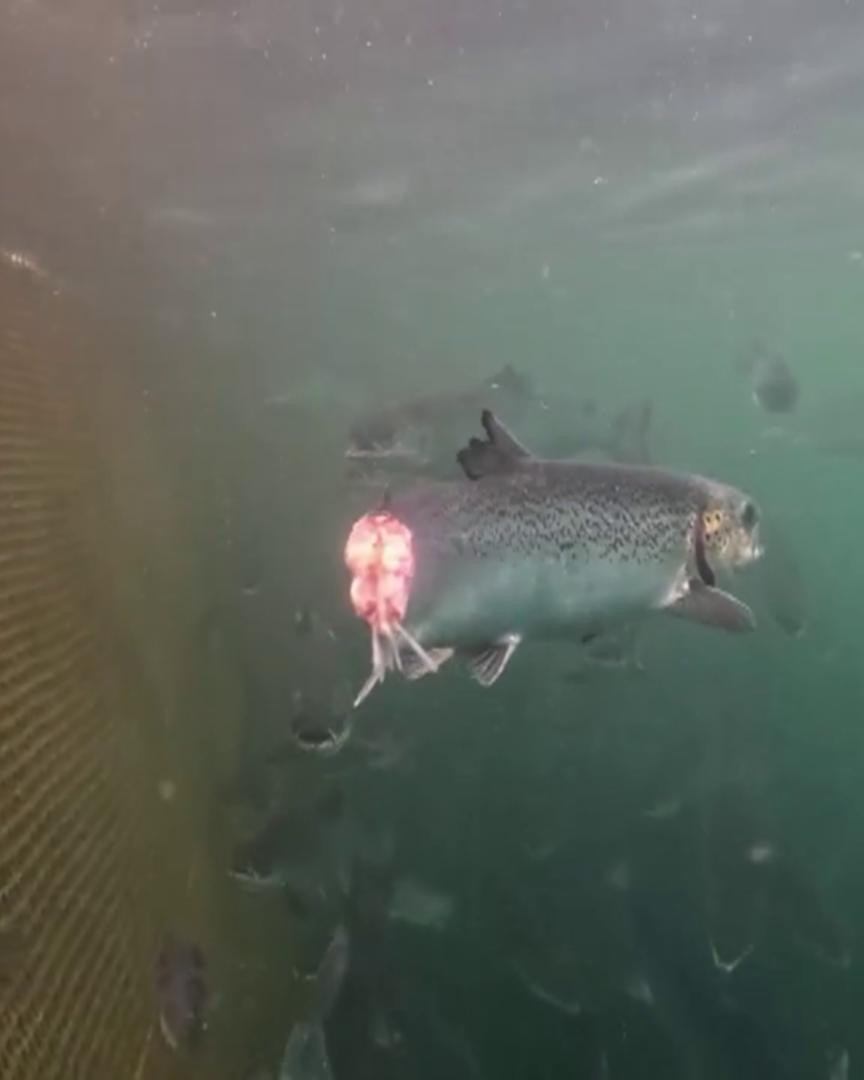
How do parasite treatment methods affect the fish?
What impact do farms have on wild salmon populations and the marine ecosystem?
Why are consumers unaware of the realities of salmon production?
Key Figures
Commentary: Salmon consumption has increased by 40% in Switzerland over the past ten years
Commentary: In the salmon industry, mortality is at least 10 times higher than in other intensive farming operations such as chickens or pigs
Commentary: Norwegian salmon production has tripled in 25 years
Commentary: There can be up to 200,000 fish per cage
Commentary: More than 1,000 farms produce some 400 million salmon annually in Norway
Finlay Carson: "In 2018, the mortality rate in the sector reached 25%. Today, that rate hasn't changed. There are even fish farms recording mortality rates of up to 85%"
Commentary: The Scottish salmon industry accounts for some 12,000 direct and indirect jobs
Commentary: In Norway, that's 50,000 jobs and sales of 10 billion francs in 2024
Quotes
Don Stanford: "What we're observing in many cases goes far beyond a simple animal welfare issue. We're talking about abuse here, even torture."
Ruben Oddekalv: "Raising a carnivore is therefore not sustainable. Period."
Trigger Popper: "A fish is not just a fish, because fish, and particularly Atlantic salmon, are highly evolved animals that possess all the senses we have. They are capable of feeling pain, fear and even despair."
George Monbiot: "Smoked salmon is almost the perfect example of consumerism disconnected from reality. It's this disconnection, this disappearance of our moral bearings that is one of the great diseases of our food system."
Alexander Nordahl: "I've dived along the entire Norwegian coast, from south to north, and as a neutral observer, the only way to describe what I see is that it's becoming hell."
Related Titles