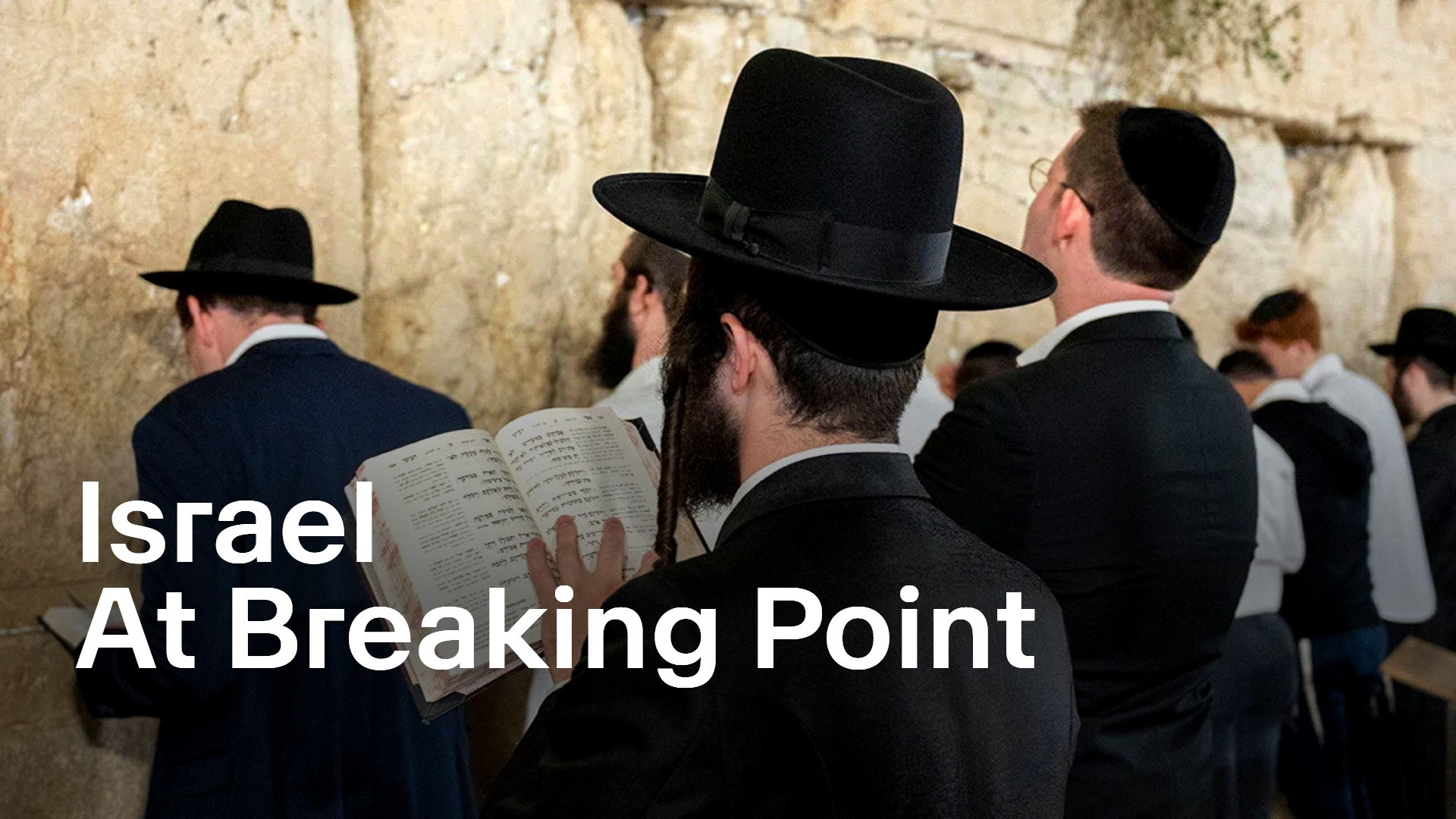
Israel At Breaking Point
On Octobre 27th, the first Israeli elections since the October 7, 2023 massacre will give the Israeli people the option to put the brakes on Prime Minister Benjamin Netanyahu's military policy. With battle lines drawn at every border, Israel has become more isolated than ever on the international stage.
This investigation shines a spotlight on the deep internal divisions tearing Israeli society apart : the religious radicalization of the ultra-Orthodox community, a youth thirsting for greater equality and democracy, and an economy caught up by war. Few Israelis dispute the need to defend the country at all costs. However, the mobilization of recruits and reservists over the past three years has drained the workforce, and tourism has ground to a halt. Portrait of a nation at breaking point.
Filming Locations
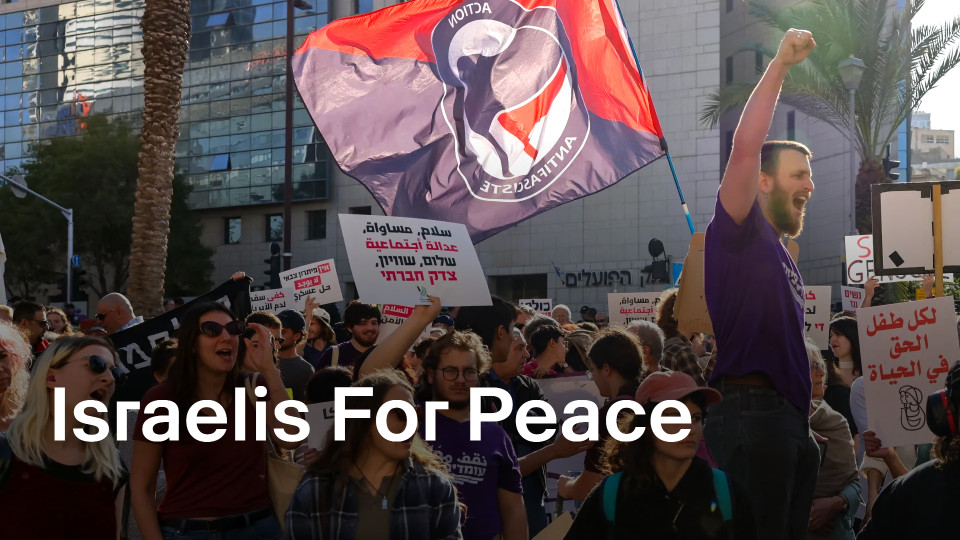
Tel Aviv (pro- and anti-government protests).
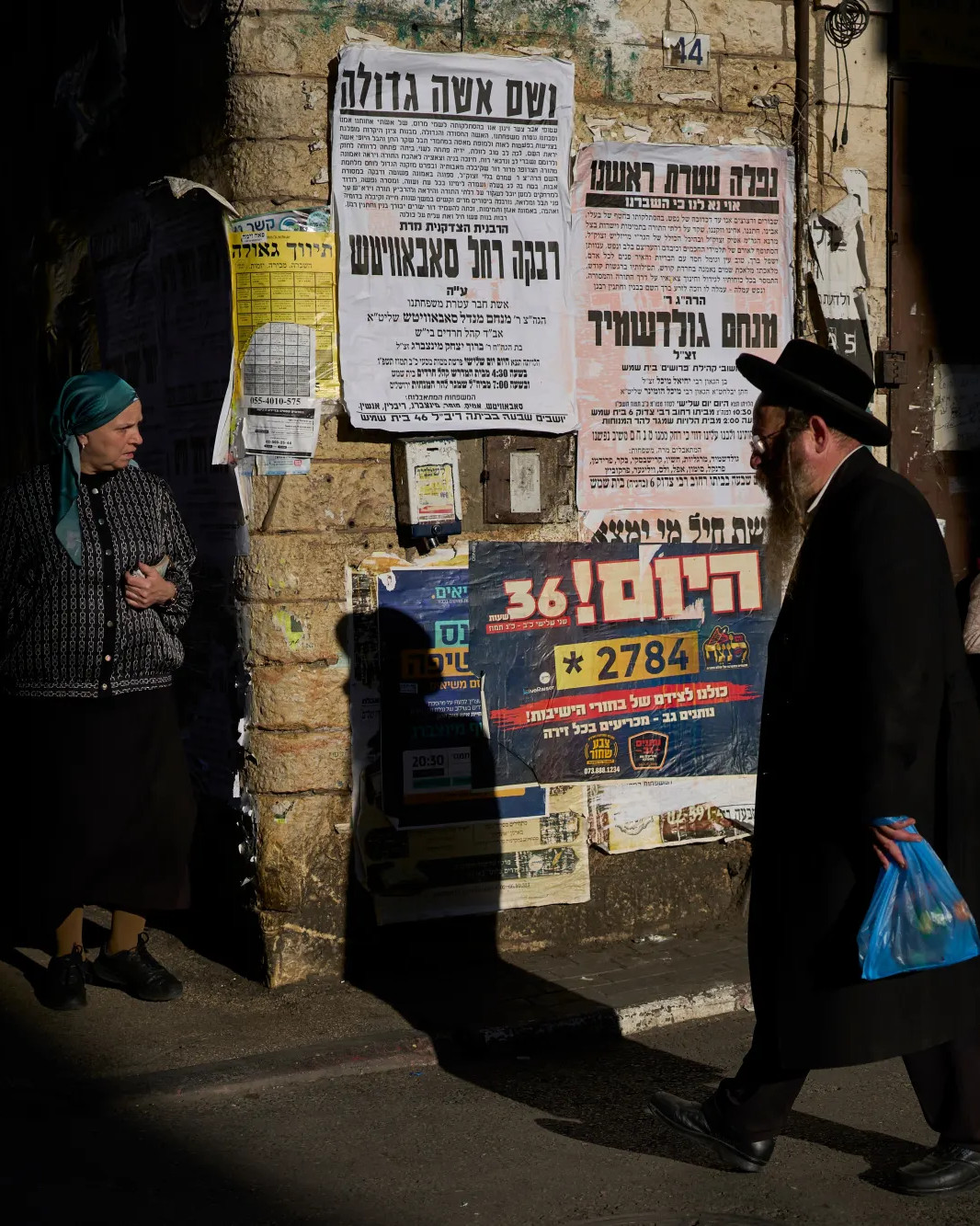
Bnei Brak (ultra-Orthodox stronghold, religious community life).
Kibbutz Kabri (avocado production, agriculture, economic impact of the war).
Northern Israel (proximity to Lebanon, missile threats).
Main Contributors
Eliad Shraga, Chairman of the Anti-Corruption Movement in Israel, lawyer.
Yaakov Vider, opposition Likoud city councilor in Bnei Brak.
Horia, student in Jerusalem, activist for freedom and against religious coercion.
Nadav, member of the Pink Front organization.
Munadar Haleila, spokesperson of the Bnei Sakhnin football club.
Yossi Abuksis, Sakhnin football coach.
Shahar Goldberg, national representative for avocado growers.
Key Themes
The military draft exemption for the ultra-Orthodox (60,000 eligible individuals) sparks tensions and debate over equal civic duties.
Religious coercion is expanding into the public sphere (Shabbat closures, gender segregation) and dividing Israeli society.
Tensions regarding the Arab minority in Israel are especially noticeable among soccer fans
The economic cost of the war (110 billion francs, 17% of GDP) is hitting tourism, agriculture, and employment, with a 75% drop in overnight hotel stays. Thaï farmworkers now represent the majority of the workforce in most Northern Israel Kibbutz.
Key Figures
110 billion francs: total cost of the war for Israel according to the Central Bank Governor, representing 17% of Israel's GDP.
60,000: ultra-Orthodox individuals between ages 18 and 24 considered fit for the military but exempt from mandatory service.
25 billion francs: the cost of replacing mobilized reservists over three years.
Quotes
Pro-Palestinian israeli protester: "Not all Israelis accept this facist doctrine of violence and murder"
Eliad Shraga, lawyer: "We are our own protectors. We are protecting Europe with what we are doing here in Israel."
Eliad Shraga, referring to the ultra-Orthodox community: "They are real parasites" .
Ultra-Orthodox protester: "If we have to choose between dying or joining the army, we choose death."
Related Titles